Choosing his and hers luxury watches is less about finding two identical objects than choosing watches that suit two people and share a thoughtful connection. One wearer may prefer a compact, understated dial; the other may want a larger case or a strong visual theme. Those differences can coexist. Begin with how each person wants to wear a watch, then choose one or two shared cues that bring the pair together.
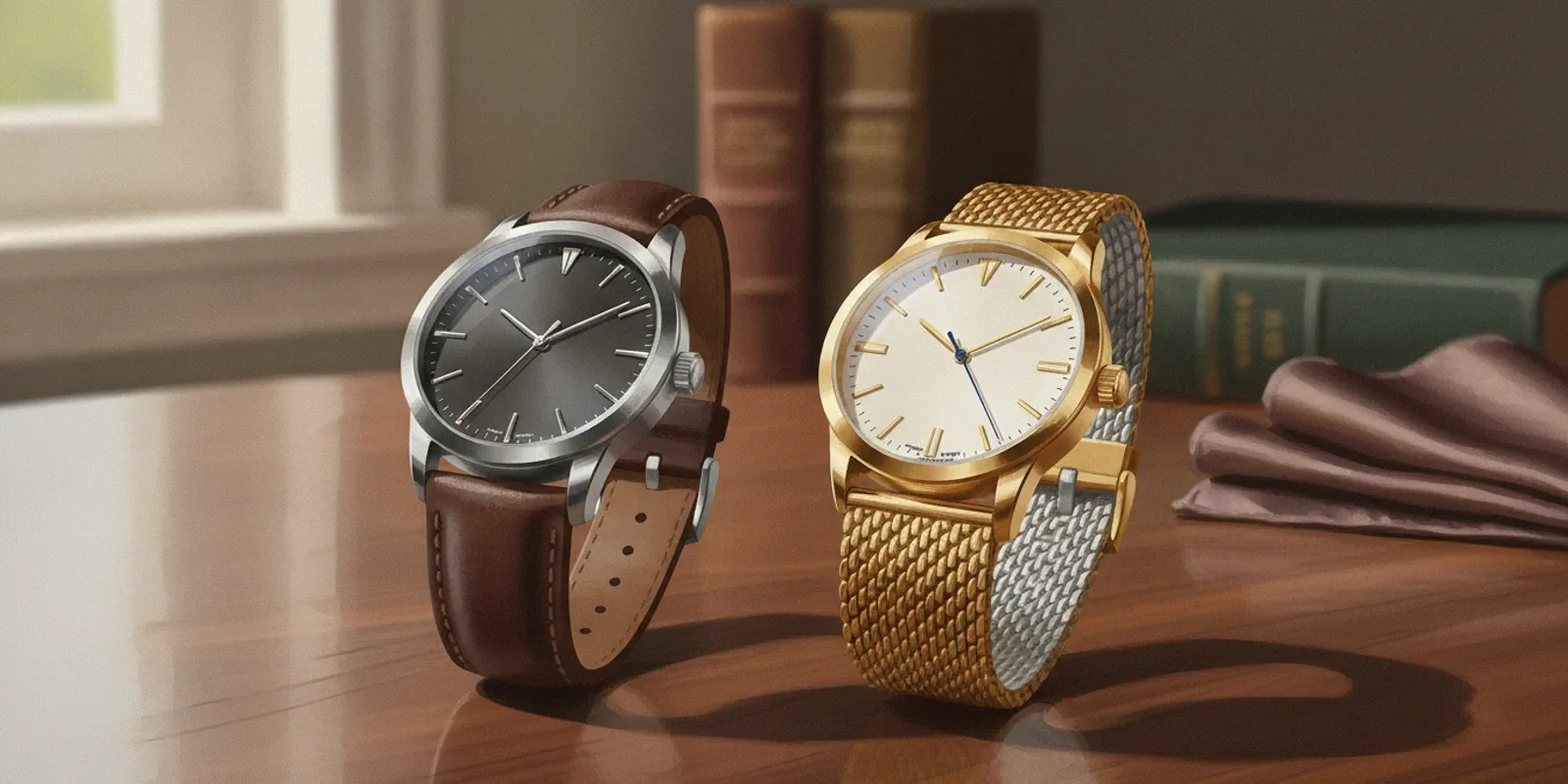
What makes two watches feel like a pair?
A coordinated pair has a point of connection, not necessarily matching specifications. The connection might be a case finish, a color family, a dial detail, or a story that matters to both people. Meanwhile, each watch should suit its wearer. That balance makes the choices feel personal rather than uniform.
Think of the connection as a small design vocabulary. For example, two watches might use steel cases while differing in dial color and shape. Or one could have a dark dial and the other a pale dial, with a similar accent color or strap tone linking them. A shared occasion or interest can also make two very different watches feel connected even when their appearance does not match at first glance.
Before browsing, ask each person to name three priorities: a dial they enjoy looking at, a comfort or fit requirement, and a detail that would make the watch meaningful. Compare the lists afterward. Overlap may reveal an easy shared cue. Differences should guide each person's choice rather than be treated as problems to erase.
It helps to separate coordination from sameness. Identical watches can be right when both people like the same proportions and styling. But identical models are not the only way to mark a relationship or occasion. If one person likes restraint and the other prefers a more expressive design, a deliberate contrast can still look considered.
Which design details can you share?
Choose one or two common features before settling the rest. Matching too many details can make the watches feel like a uniform; no shared cue at all may make them seem unrelated. One clear anchor gives the pair coherence while leaving room for individual taste.
Case material and finish
Case material is a useful starting point because it is visible without controlling the whole design. Two cases with a similar metal appearance can have different shapes, sizes, and dials. Finish changes the impression, too. Brushed surfaces tend to look quieter, while polished surfaces catch more light. These are visual observations, not quality rankings. Ask which finish each wearer would be pleased to see on their wrist every day.
View candidate watches under ordinary lighting if possible. Store photography can make a surface look brighter or darker than it does in a room. If the two people favor different metal tones, look for another shared feature, such as a dial accent or a related strap color. A single point of connection is enough; not every detail has to match.
Dial color, markers, and visual detail
Dial color is a strong visual cue. A pair might share a color family without repeating the exact shade: slate and silver, for instance, can feel related without being identical. If the colors differ, similar markers, hands, or a restrained accent can provide a quieter link.
Also consider how much activity each person likes on a dial. Printed scales, applied markers, textured surfaces, and artwork all change its character. One wearer may want an uncluttered face, while the other enjoys a dial with a story. A common case finish or strap tone can connect the pair without asking either person to give up the dial they prefer.
Look at the dial beyond the first impression. Ask whether the wearer can read it comfortably at a glance and whether the design still appeals after spending time with it. A striking face can be memorable, but it should be a design the owner is happy to wear repeatedly rather than only admire in a product photograph.
Straps and bracelets
Straps can link two watches without making them identical. Related leather colors can bring different case designs together. A bracelet on one watch and a leather strap on the other may still coordinate through their dials or case finishes. Think about the settings and clothing in which each person expects to wear the watch.
Do not select a strap only because it looks good beside the other watch. It sits against one person's wrist, so feel, comfort, and preference matter. If a watch has interchangeable straps, confirm that the exact model supports the strap type and size being considered. Similar-looking cases do not establish that two watches take the same strap.
A shared story rather than a shared look
The connection does not have to be an obvious visual feature. A shared hobby, place, date, or artistic interest may be more meaningful than matching colors. Choose a story that is genuine to the people who will wear the watches. Do not assume two watches are a formally coordinated collection unless the maker identifies them that way.
For a golf enthusiast or sports-art collector, Bart Forbes Chrono describes PRO Tour I as a golf-art collectible in mechanical-watch form. The seller says the dial carries golf artwork by painter Bart Forbes and that the watch is sold with a signed, numbered companion art print. That example may be worth considering when golf imagery and art matter to one or both wearers. It is a named watch, not evidence of an available his-and-hers set. A second watch should be chosen on its own merits, with the couple's interests providing any shared meaning.
Read the PRO Tour I product information for the seller's description of the watch and its artwork. If a golf-art dial appeals to one person but not the other, that is useful information. The pair can still connect through a subtler cue, such as a color, an occasion, or a personal note accompanying the watches.
How should each person choose a case size?
Case size affects appearance and comfort, but one diameter number cannot tell you whether a watch will fit well. Case shape, thickness, lug-to-lug length, strap attachment, and wrist shape all matter. Personal preference matters as much as measurement: some people like a watch that occupies more of the wrist, while others want it to feel discreet.
Start with a watch the person already finds comfortable, if available. Compare its case diameter and overall length with the candidate, using those figures as a starting point rather than a verdict. A broad or flat case may look and feel different from a compact case with the same listed diameter. A thick case can sit higher and interact differently with a sleeve.
When a physical try-on is possible, check the watch from several angles. Notice whether the case feels stable or shifts around. See whether the lugs overhang the wrist in a way the wearer dislikes. Adjust the strap or bracelet to a secure, comfortable fit, then move the wrist, bend it, and try a familiar sleeve or cuff. A brief try-on will not answer every question, but it can reveal pressure points or an awkward profile.
If shopping remotely, find the maker's published measurements and compare them with a watch the wearer can try on. A paper outline can help visualize dial diameter, but it cannot reproduce thickness, weight, or case curvature. Confirm the units and whether the listed number refers to diameter, width, or another dimension. If a key measurement is missing or unclear, ask the seller rather than filling in the gap yourself.
Each person should make this assessment separately. There is no reason the two watches must have equal diameters or identical proportions. Different case sizes can look equally intentional on different wrists. The goal is a comfortable fit for each wearer, not a uniform specification.
How do you account for daily comfort?
A watch should suit how its owner actually spends time. Consider the wearer's routine, clothing, and preference for a watch that feels noticeable or unobtrusive. For someone who works at a desk, case height and contact with a desktop may matter. Someone who wears fitted sleeves may care about how easily the watch passes beneath a cuff.
Weight is personal. A substantial watch may feel reassuring to one wearer and tiring to another. A bracelet may feel secure and familiar to some people, while others prefer the softer contact of a strap. No material or construction is automatically comfortable for everyone. When possible, let each person wear a candidate long enough to notice pressure, shifting, and how its clasp or buckle feels.
Consider where the watch will be worn. A watch intended for office attire may need to work with sleeves and frequent computer use. A watch chosen for casual weekends may prioritize a relaxed appearance. An art-led golf watch can express a connection to the sport through its imagery, but its theme does not make it a GPS, shot-tracking, or on-course performance device. Match the watch to its intended role and consult the maker's care and use guidance for that exact model.
Water-resistance statements deserve particular care. Do not infer suitability for swimming or diving from a watch's appearance or from vague wording. Look for clear specifications for the exact watch and ask the seller if product information conflicts. If the guidance is not consistent and unambiguous, treat water exposure conservatively.
Should both watches have the same movement?
Movement preference is individual. A mechanical movement may appeal to someone who enjoys traditional watchmaking and the routine of wearing a mechanical timepiece. Another person may prefer a different type of watch or care more about appearance, simplicity, or maintenance. Two watches do not need identical movements to feel thoughtfully chosen.
An automatic mechanical watch is powered by the wearer's wrist movement while it is worn. Depending on its design and power reserve, it may need winding or resetting after it has been left unworn. Owners should follow the maker's instructions for winding, setting, and care. Do not assume that every automatic watch has the same reserve, accuracy, service needs, or operating details.
For each candidate, check the movement description and whether the seller identifies it clearly. Ask what routine care is recommended, what the written warranty covers, and how authorized service is handled. These details can affect whether a watch suits the person who will wear and maintain it. A pair does not become more luxurious simply because both watches use the same mechanism.
When one wearer chooses a mechanical watch and the other prefers something different, focus on what the watches share in appearance or meaning. A related dial color, case finish, or connection to an occasion can bring them together without requiring matching technology.
How can an art dial fit into a pair?
An art dial can make one watch especially personal, but both people should understand what the watch is and is not. PRO Tour I is presented by Bart Forbes Chrono as a golf-art collectible in mechanical-watch form. The seller describes the golf artwork by Bart Forbes on its dial and a signed, numbered companion print. Those attributes can make the watch relevant to a golfer, collector, or sports-art enthusiast who values the connection between a timepiece and an image.
That artistic connection does not mean the watch performs golf functions. It should not be treated as a GPS, shot tracker, or on-course performance device. Someone looking for those functions should evaluate a watch specifically on its stated capabilities. Someone drawn to the artwork should look at the dial, the product description, and the included print as distinct parts of the offer.
When considering an art-led watch for one person and a more restrained watch for the other, seek balance rather than duplication. A neutral strap or shared color could link the pieces. Or the shared story might be enough, even if their visual styles are far apart. Neither wearer has to select an art dial solely to make the pair match.
For more context on the artist, consult the company's Bart Forbes background page. Treat product statements as the seller's descriptions, and distinguish the artist's background from independent authentication of an individual watch or its technical performance. Check the current product details for the exact options available rather than assuming every image or description applies to every selection.
How can you personalize a pair without overdoing it?
Personalization can be as simple as choosing different dials or straps that suit each wearer. If engraving is offered, verify its location, character limit, and whether it affects returns or service. Do not assume an engraving option exists or that a watch can be modified after purchase.
A practical approach is for each person to write down what they would personalize and rank the details. One may care most about strap color, while the other values a dial theme. Agree on a shared feature, such as a color family or occasion, and let individual preferences guide everything else. This keeps the presentation from overshadowing what each person will actually wear.
For a meaningful date, a note or card can carry the message if either wearer prefers understated design. If a maker offers an accessory or customization, confirm the specific option and terms directly. A gift-giver's assumption is not a substitute for a documented product feature.
Personalization is not automatically an improvement. Depending on the seller's policies, it may make future changes more difficult. Review written warranty, service, and return terms before authorizing a modification. The aim is an object that feels personal and remains suitable for its owner, not an added detail for its own sake.
How can you compare the options fairly?
Comparing two watches is easier when each person uses the same checklist but ranks the factors independently. One wearer may put fit first; the other may care most about the dial. A shared process makes trade-offs visible without pretending both people value the same features.
Fit: Record case diameter, thickness, and overall length when available. Compare those figures with a watch the wearer finds comfortable.
Dial: Note color, legibility, visual detail, and whether the design has a personal connection.
Movement: Confirm the type of movement and understand the stated operating and care guidance.
Wear context: Consider typical clothing, work, travel, and the settings where the watch is likely to be worn.
Construction: Review the case, crystal, strap or bracelet, and the maker's exact published specifications.
Ownership terms: Read current warranty, service, return, shipping, and payment terms before making a decision.
Shared cue: Choose one or two details that connect the pair without overriding either person's preferences.
Make a separate short list for each person and compare the lists only after both are complete. A feature one wearer considers essential may not matter to the other. That is useful: it shows where coordination is easy and where each person should choose independently. If one candidate wins on design but loses on comfort, do not let the idea of a matching pair conceal that trade-off.
When candidate watches differ in price, set a comfortable total budget first and evaluate each watch on its own terms. The price of one should not be treated as a measure of affection or commitment. Verify current pricing and payment terms directly for each selection. Do not rely on old promotions or figures remembered from another listing.
What should you verify before buying?
Review each watch separately, even if the two look similar or appear together in a photograph. Product pages, options, and policies may change. Confirm the exact model and selected configuration rather than assuming a detail from one watch applies to another.
Identity and specifications: Confirm the model, dial, case size, movement, and included accessories. Ask for clarification if product descriptions disagree.
Price and payment: Verify the current amount, currency, accepted methods, and any payment schedule at the time of purchase.
Delivery: Confirm current availability, fulfillment information, shipping charges, and destination coverage. Do not assume old delivery statements remain current.
Returns and warranty: Read the written terms, including eligibility, notice deadlines, condition requirements, and how a service request is handled.
Documentation: Understand what documentation accompanies each watch and what the seller's statements doâand do notâestablish.
Pair assumptions: Verify whether the watches are actually offered as a set or are separate choices being coordinated by the buyer.
For PRO Tour I, company information describes a Swiss-made, hand-assembled watch with a Swiss automatic movement. Treat those details as seller-published descriptions, not independent testing. A buyer who needs a specific technical detail should confirm it against the current product information and written terms for the exact watch.
Be careful with statements that sound precise but do not explain what is being counted. An edition description, for example, may refer to a total number or a quantity associated with a particular dial. Do not infer an edition count or current inventory from a general scarcity statement. Ask for clarification about details that matter to the purchase.
Likewise, a stated warranty is not the same as a promise that every type of damage or return is covered. Read the written conditions before buying. If a question about eligibility, service, or delivery would affect the decision, get a clear answer before relying on an assumption.
The store's PRO Tour I shop page is one place to review the seller's current product and purchase information. Confirm the live details there or directly with the seller before acting; a previously published page or remembered term is not proof of current stock, timing, or fulfillment.
How can you present two watches together?
A coordinated presentation can make separate watches feel considered without implying that they are a factory-matched set. Use a shared palette in the wrapping, a handwritten note about why each watch suits its wearer, or a short explanation of the connection between the choices. Keep the presentation consistent while allowing the watches to remain distinct.
If the watches come from different makers, keep their documentation separate and preserve each box, certificate, and receipt as supplied. Do not combine paperwork or imply that one seller's warranty covers both watches. Before arranging a surprise, make sure the recipient's fit, styling preferences, and comfort needs are understood. A polished presentation cannot correct an unsuitable watch.
Do not assume that a seller offers gift wrapping, gift receipts, recipient exchanges, or delivery by a particular date. Confirm any service and timing before relying on it. If timing matters, ask for current information and avoid promising arrival on a specific occasion.
A small written explanation can make the choices feel connected: perhaps the watches reflect a shared interest, but each one also suits the person who will wear it. That message is often more thoughtful than insisting the designs match exactly. Keep the note specific to the wearers rather than relying on generic claims about a set.
What are common mistakes when choosing a coordinated pair?
Choosing for the photograph
Two watches may look perfect together in a styled image and feel wrong on the wearers. Product photography may not show thickness, weight, or how a strap sits. Compare measurements and try each watch on when possible. The people who will wear the watches should have a meaningful say in the choice.
Assuming the same size suits both people
Matching does not require matching diameters. Wrist shape, comfort, and style preferences differ. Treat each watch as an individual fit decision, then use shared visual details for coordination instead of forcing equal proportions.
Prioritizing the pair over the person
A coordinated pair is not successful if one watch stays unworn. Each person should like the dial, feel comfortable wearing the watch, and understand its upkeep. If preferences do not overlap on a major feature, choose different watches and connect them through a subtler detail.
Assuming one watch's features apply to the other
Two watches that look alike may have different movements, materials, warranties, or use guidance. Verify each product separately. Do not transfer a specification, return promise, or service policy from one listing to another without confirmation.
Relying on unclear scarcity or outdated terms
Inventory, price, and delivery details can change. A limited-edition description does not tell you what is currently available or when an order will arrive. Confirm the current facts that affect the decision instead of relying on a general statement.
Confusing theme with function
A sports-themed design does not establish that a watch includes tools for that sport. An art-led golf watch, for example, should not be assumed to track a score or provide GPS. Decide whether the wearer wants a collectible, a daily timepiece, a sports device, or some combination supported by the exact product's documented functions.
Frequently Asked Questions
Do his and hers luxury watches have to match exactly?
No. They can share a case finish, color family, design detail, or personal story while differing in size, dial, strap, and movement. Begin with what each person likes, then use a small number of shared cues to connect the choices.
Should a couple buy two watches from the same brand?
Not necessarily. A shared brand can make comparison convenient, but it does not guarantee that both watches will fit or appeal to their wearers. Choose each watch on its own merits, then decide whether a common design feature or story creates the right connection.
What is the best case size for two people?
There is no single best size for everyone. Compare diameter, thickness, and overall length with a watch each person finds comfortable. Try the exact watch on when possible, and consider case shape and how it sits on the wrist rather than relying on diameter alone.
Can one watch be automatic and the other use a different movement?
Yes. Movement choice is personal, and watches do not need matching mechanisms to look coordinated. Each wearer should understand the operating and care instructions for their own watch.
Is a golf-art watch a performance watch for playing golf?
Not by default. Bart Forbes Chrono presents PRO Tour I as a golf-art collectible in mechanical-watch form, not as a GPS, shot-tracking, or on-course performance watch. Check a specific product's documented functions rather than inferring them from its theme.
Final perspective
A thoughtful pair starts with two people, not a matching product photograph. Let each wearer choose a watch that fits their wrist, routines, and taste, then bring the choices together with a shared detail or meaningful story. Verify the specifications and current purchase terms for both watches, and the result can feel connected without asking either person to settle for a watch they would not choose on their own.
